ULIDs
- data-structures
If you use UUIDs (who doesn't?), consider swapping them out for ULIDs. They're sortable!
Like UUIDs, ULIDs are made of 128 bits.
But instead of randomizing ALL the bits, ULIDs encode a timestamp in the first 48. The last 80 are completely randomized.
This is easier to see with an example.
The ULID 01HX2AY3TN3M5ZFA5TG2WZJZ6G can be broken down into its two parts:
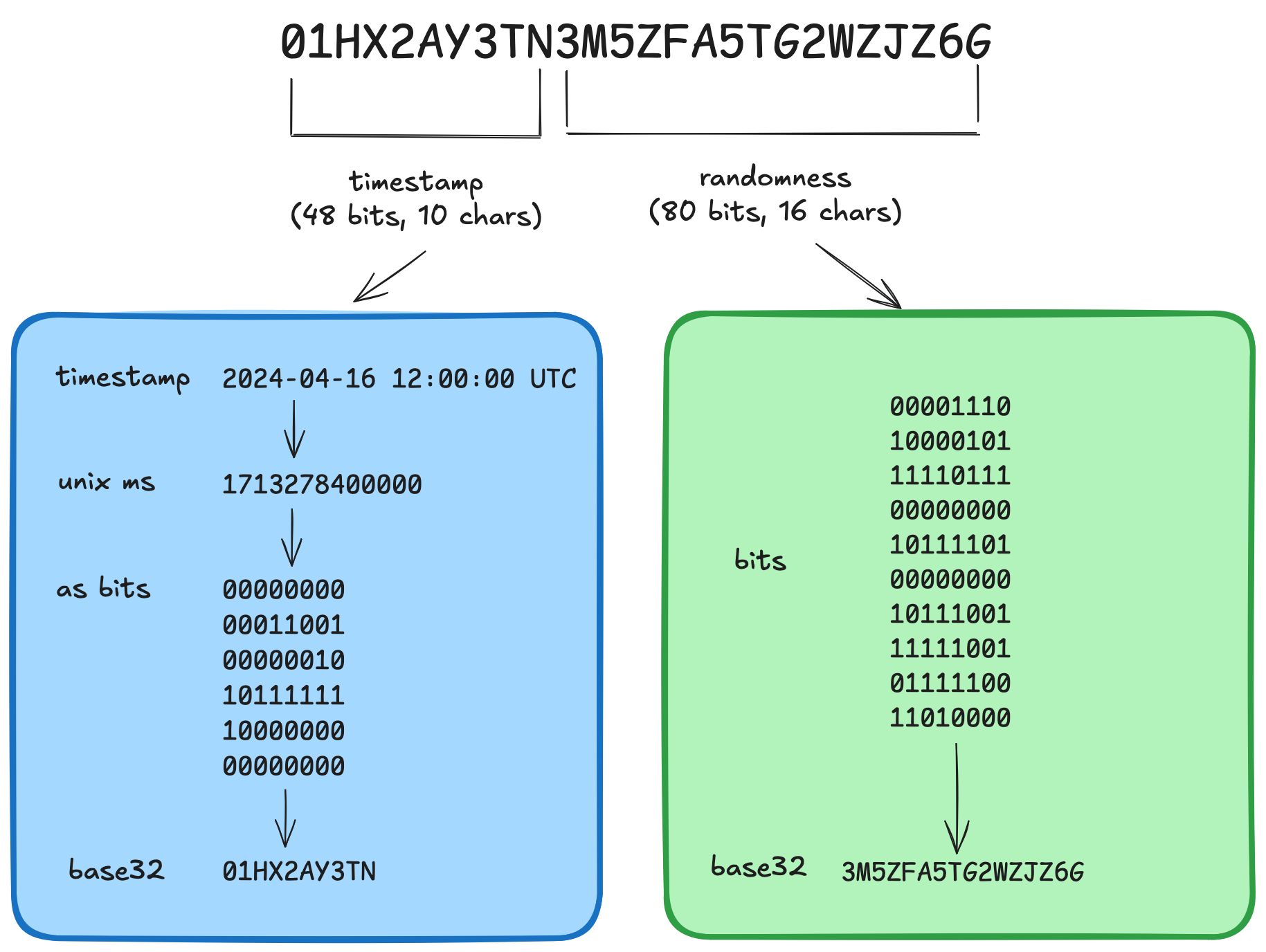
(a) 01HX2AY3TN, 10 characters that represent time
(b) 3M5ZFA5TG2WZJZ6G, 16 base32 characters that represent a random value
Now, when you want to compare two ULIDs, you decode the first 48 bits back into a timestamp and know which was generated first.
Almost every major language now has library support for them.
(But as usual, you can't reliably compare timestamps across machines in a distributed system, so there's no cure there. :)